
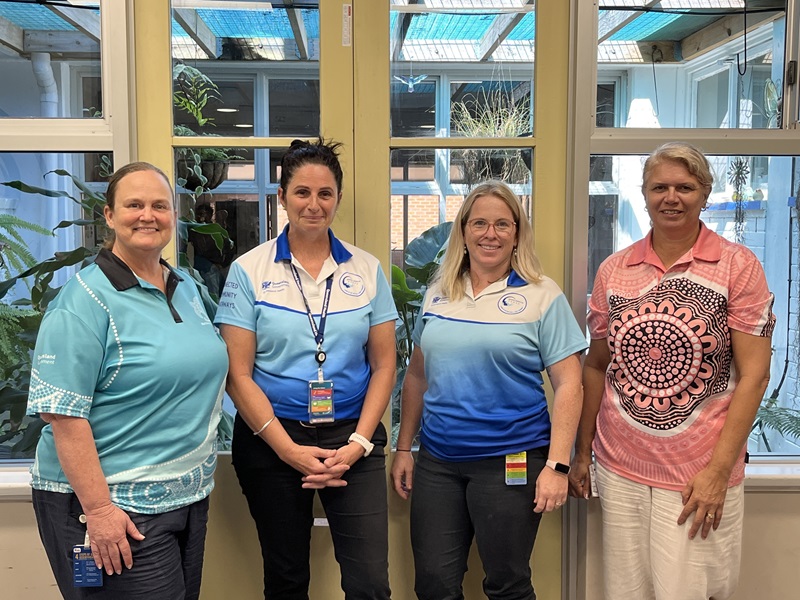
Bowen Hospital’s Frail Aged Nurse Practitioner Service is delivering essential outreach care to help the community’s most vulnerable residents stay healthy and independent for longer.
Designed for people aged 65 and older, and First Nations people aged 50 and over, the Frail Aged Nurse Practitioner Service (FANPS) provides clinical assessments, support pathways and care in a variety of community settings.
Service lead and nurse practitioner Alicia Gubb describes FANPS as a crucial link for residents to access early intervention and ongoing support.
“With Bowen’s ageing population, there is a need for nursing and support services here. We are a multidisciplinary team of four, including a clinical nurse consultant, social worker and First Nations liaison officer, supporting older people who might otherwise delay seeking care or face the stress of a hospital visit,” she said.
“The service provides comprehensive care in the community by managing a range of common conditions in older people, including infections, acute delirium, minor injuries and changes in chronic diseases.
"Since commencing in October 2024, we’ve seen the service grow to meet a real need in our community. During our first month of operation, we conducted 70 appointments; that number has more than doubled to reach 192 appointments in January this year.”
Alicia said FANPS aims to improve access to care and help reduce emergency department presentations by providing acute primary care in the Bowen community.
“Timely management of health conditions is particularly important in rural areas with limited urgent care access. As a nurse practitioner, I have advanced scope of practice, which means I am able to treat people, such as nursing home residents, experiencing infections and condition flare-ups.
“We’re already seeing the impact early intervention is having on emergency department presentations, with a 25 per cent reduction in less urgent (triage 4 and 5) cases in December 2025 for patients aged over 75, compared to the same period in 2024.”
Referrals to the service come from a range of sources, including the emergency department, GPs, aged care providers, care workers and community service organisations.
“On average, the service receives 10 referrals a week. We see hospital inpatients ready for discharge, as well as people receiving in-home care who need additional support,” Alicia said.
“We also visit local nursing homes to identify anyone with emerging health issues between GP visits.
“I see 18 residents each week at our two nursing homes in Bowen, for issues ranging from infections and mood disorders to palliative care and advanced care planning.”
The team recently launched a new Frailty Rapid Access Clinic with telehealth geriatricians – specialist doctors who care for older people.
“FANPS works directly with telehealth geriatrician service Geriatric Care Australia who provide specialist input into managing complex geriatric conditions, such as delirium, young onset Alzheimer’s dementia and capacity concerns,” Alicia said.
“The clinic reviews community patients with urgent concerns and at risk of hospital presentation where the geriatrician provides support and guidance to the nurse practitioner in complex cases, such as advice for prescribing and management of geriatric conditions.”
Alicia said the team’s proactive approach provides early intervention to help people remain in the familiar surroundings of their homes and avoid a decline in health.
“Sometimes older people who live alone don’t aways have someone to notice health changes. They can be quite stoic and may not seek care until it’s too late,” she said.
“Our social worker helps families navigate services and reduces stress for patients by connecting them to supports, advocating for patient to commence or increase My Aged Care services, concerns for elder abuse, supporting financial hardship and housing crisis, and emotional and grief support.
“Given older adults are a vulnerable population, our social worker is vital in avoiding crisis situations that can often result in lengthy inpatient admissions.
“We want to enable our older patients to spend as little time in hospital as possible, prevent deterioration in frailty, and improve their quality of life.”