
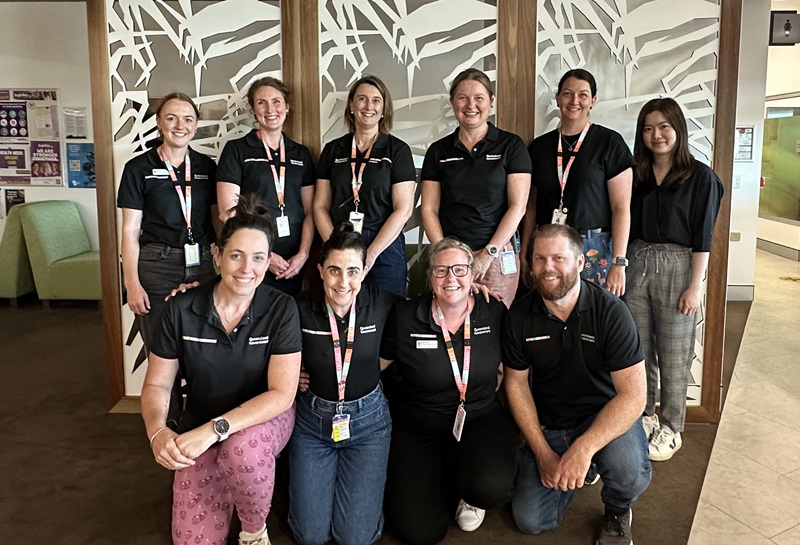
Two Mackay Base Hospital wards have been recognised as standout performers for their efforts to prevent delirium, preserve mobility and improve the hospital experience for older patients.
Wards F2 and G2 have been praised for their success and consistently achieving top-tier metrics across the state with the Eat Walk Engage program.
The high-performing wards have embraced the EWE program and implemented a variety of creative strategies to foster patient well-being, Mackay Hospital and Health Service (HHS) Eat Walk Engage Clinical Lead and Director of Nutrition and Dietetics Louise Moodie said.
The multi-disciplinary program focuses on three foundational pillars for patients during their hospital stay to promote wellbeing and prevent functional decline: Eat to optimise nutrition and hydration; Walk to enable early, graded mobility; and Engage to encourage meaningful cognitive and social activities.
The program has been a major success, empowering multidisciplinary teams to deliver better care and prevent delirium in older patients, Louise said.
“The statewide Eat Walk Engage team undertook their annual site visit earlier this month to share the recent results of the statewide program and also how we are doing locally,” she said.
“It was fantastic to hear that F2 and G2 continue to be some of the top wards across the state across many of the areas that are monitored.
“Our newer wards have also seen great improvements in just their first six months, particularly in the areas each of these wards has focused on during that time.”
Eat Walk Engage (EWE) has been functioning on F2 and G2 for a number of years, and last year expanded to F0, G0 and GSU at Mackay Base Hospital.
EWE facilitator and senior psychologist Lauren Beauzec said the latest data across the five adult medical wards was incredibly positive in terms of patient behavioural improvements.
“On G0, time spent outside the bedroom increased from 4 per cent to 11 per cent of the day, with patients now spending almost one hour per day out of their room and on ward FO, time spent mobile increased from 3 per cent to 14 per cent and the number of patients ever observed to mobilise over the course of a day almost tripled,” Lauren said.
On the General Surgical Unit (GSU), the percentage of patients sitting in a chair when meals arrived increased from 10 per cent to 29 per cent (across breakfast, lunch and dinner) and this was closely associated with improvements in dietary intake.
“In fact, the percentage of vulnerable or older patients on the ward who ate more than 50 per cent of their meal actually increased from 66% to 79%,” she said.
Statewide research showed the program's practical, patient-centred approach was helping reduce delirium in at-risk patients by nearly half (47 per cent).
By focusing on small daily interventions, such as helping patients sit out of bed to eat, using hearing devices, and offering social companionship, the hospital reduces hospital-acquired complications and helps patients return home sooner.
“It was great to see how the collective efforts of the 45 Eat Walk Engage wards across the state are leading to ward-level behavioural improvements that have been shown to reduce delirium, such as encouraging safe mobilisation, improving nutrition, and enabling meaningful engagement,” Louise said.
“Reducing the risk of delirium is vital, not just to the immediate experience of our patients, their loved ones, our staff, and the impact on the health system due to higher care requirements and longer length of stay, but also due to the risk to longer term health.”
Some of the initiatives implemented by EWE working parties included art conversations where small groups of patients were taken out on the deck for natural light, art viewing and discussion; therapy dog visits to bring joy and activity to wards; and sensory and communication aids including large print clocks and daily newspapers to keep patient mentally stimulated and socially engaged.
Eat Walk Engage is a comprehensive program to improve the care of older patients in hospital, and has been demonstrated to reduce delirium, functional decline, reduce length of stay and improve the ability of older patients to be discharged home.
These behavioural improvements include increased communication with patients regarding the importance of mobility, patients sitting out in a chair when their meals arrive, and patients being aware of what they can do on the ward to keep their mind active.
Every event of delirium increases that person’s risk of developing dementia, which is the leading cause of death for all Australians and can place significant strain on families and the health system.