
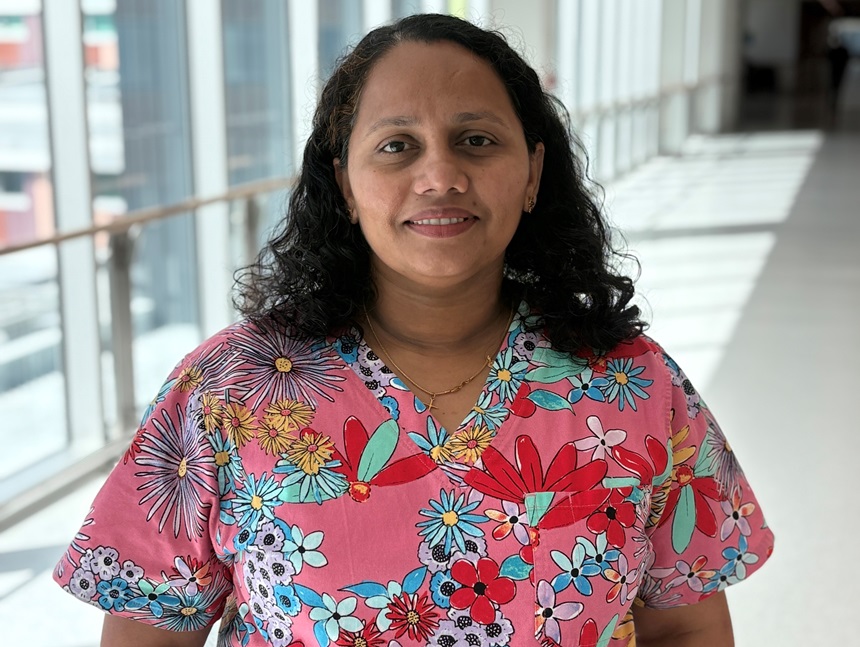
Bini Varghese describes her new role as being a bridge between doctors and patients navigating the “rollercoaster journey” of melanoma treatment.
As the first specialist melanoma clinical nurse consultant for Mackay Hospital and Health Service (HHS), Bini will work within a multidisciplinary team to provide care and support for patients undergoing treatment for one of the deadliest forms of skin cancer.
The Mackay region has one of the highest rates of melanoma in Queensland with about 170 new cases diagnosed each year. This represents a 41 per cent increase in cases locally the last six years, Bini said.
Embedded within the melanoma multidisciplinary service, Bini will act as a central point of contact for those who are diagnosed and on active treatment. Her new role is temporary until June and is funded by the Melanoma Institute of Australia.
“I will be providing support, education and advanced specialist nursing care, working closely with general surgery and medical oncology to support patients throughout their treatment journey,” she said.
Bini brings extensive clinical experience to the role, having previously worked at Sarina and Mackay Base hospitals in the general surgery unit, as well as trauma and orthopaedics in Brisbane. The opportunity to provide specialist, ongoing support to patients was a major drawcard of the role.
“This is a different kind of trauma,” she said. “Every patient’s diagnosis, treatment and experience is unique.”
A melanoma diagnosis could be overwhelming for patients and their loved ones, impacting every aspect of life.
“Diagnosis is life-changing. It becomes an emotional, financial and personal rollercoaster,” Bini said.
“This role is about personalising the cancer care journey, helping to minimise the impact of disease and treatment complications, and optimising patient outcomes.
“It’s also vital as a point of call for patients who experience side effects or complications, helping them get the right advice early and potentially avoid presentations to the emergency department during or after treatment.”
After breast and prostate cancer, melanoma is the most common cancer for Australians aged 20 to 39. One Australian dies from melanoma every six hours.
“It can be aggressive and fast-progressing, but if detected and treated early, there is around a 90 per cent recovery rate,” Bini said.
“Treatment times can range from 12 months to years depending on the stage of melanoma, a patient’s age and their overall health.”
Bini emigrated to Queensland from southern India in 2000 and moved to Mackay in 2011. She said sun safety in the region could not be overstated.
“Early detection of melanoma is key. Regular skin checks and investigating any changes to moles as soon as possible can save lives,” she said.
“People need to look after their skin the same way they look after the rest of their health. There are lots of resources available, and now there’s more local support too.”
Bini is looking forward to working closely with general surgery, day infusion, medical oncology teams and local GPs, while also connecting with other specialist melanoma clinical nurse consultants in Townsville, Bundaberg and Hervey Bay at a conference planned in June.
“This will be a challenge and a learning curve, but this is a role that is very much needed in the Mackay region,” she said.
“I’m really looking forward to being that supportive bridge between doctors and patients as they undergo treatment.”
Bini will see patients in Specialist Outpatients (SOPD) from Monday to Wednesday, 7am to 3pm, from 16 February.