
Telehealth is transforming how children and families across the region access specialist care, reducing the need for long-distance travel and helping patients receive coordinated treatment closer to home.
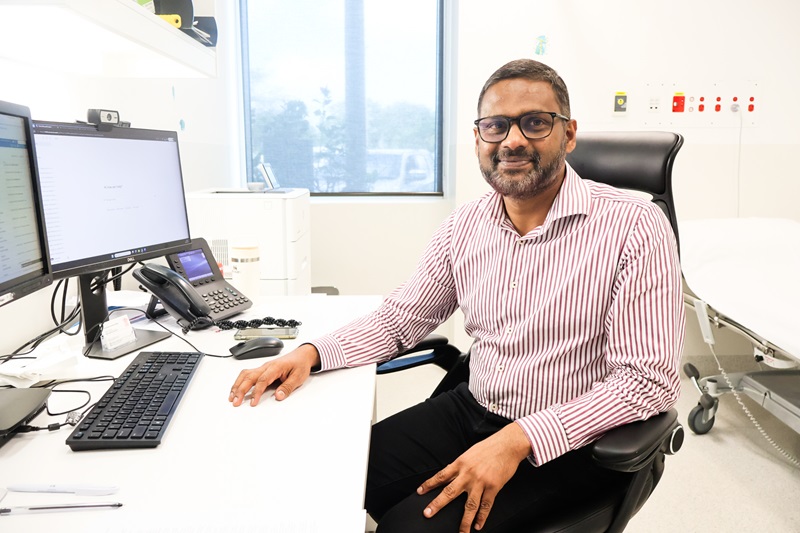
For Mackay Hospital and Health Service (HHS) paediatrician Dr Gopakumar Hariharan (Dr Gopan) telehealth improves access to healthcare while easing the physical, emotional and financial pressures on families managing complex medical needs.
“Telehealth is not simply an alternative to traditional care. It is an essential part of providing modern, compassionate and patient-focused healthcare,” Dr Gopan said.
“For some children, particularly those with sensory sensitivities, anxiety or behavioural conditions, attending a busy clinic can be overwhelming. Being able to consult from home can reduce distress and make appointments more productive.”
One family to benefit is eight-year-old boy Blake who lives in Collinsville and has a complex congenital condition requiring input from multiple specialists and allied health professionals across facilities in Mackay, Townsville or Brisbane.
Blake suffers from a significant developmental delay, epilepsy, visual impairment, limited mobility, severe sensory sensitivities and autism and requires constant one-to-one care and assistance with daily activities.
For his mum, Julia, managing Blake’s care has been part of family life. However, living in Collinsville adds another layer of complexity, with specialist appointments often involving lengthy travel, time away from work and careful planning around the needs of the whole family.
For the last seven years, telehealth has helped ease that burden, allowing Blake to access specialist consultations from the comfort of home and enabling local clinicians to collaborate with specialist teams when urgent medical concerns arise.
For his family, it means less time travelling, greater flexibility and more opportunities to focus on what matters most: helping Blake stay safe, supported and connected to his family and community.
“Telehealth is great and I think I would use it even if I lived in a city,” Julia said.
“Telehealth saves me a lot of time. I can arrange appointments on my lunch break or on my shorter days, rather than taking two days out to travel,” she said.
“For Blake, he can stay in a familiar environment and reduce the stress for everyone.”
Blake’s experience demonstrated how telehealth can overcome geographical barriers, strengthen connections between healthcare teams and support coordinated care closer to home, Dr Gopan said.
He works with Blake’s multidisciplinary care teams and his family to identify which aspects of care can be safely delivered through telehealth.
This approach enables care teams to coordinate specialist reviews, medication adjustments, referrals and care planning, as well as multidisciplinary case conferences involving specialists and allied health professionals.
Telehealth also enables him to work with local clinicians and specialist teams at some facilities to support timely treatment closer to home and reduce the need for unnecessary transfers, Dr Gopan said.
“For families in regional and remote communities, it also means we can provide specialist oversight and maintain continuity of care without every appointment requiring a long journey,” he said.
Dr Gopan uses telehealth for outpatient reviews, discussing investigation results, ongoing management and follow-up consultations that do not require a physical examination.
“Telehealth looks beyond traditional models of care and considers what works best for each patient and family,” he said.
“Telehealth helps us bring care to the patient, rather than expecting every patient to travel to us. That is particularly important for families in regional Queensland, where distance can be a significant barrier to accessing specialist services.”
Mackay HHS is highlighting the benefits of virtual healthcare during Virtual Care Week, from 26 to 30 October, showcasing how innovation and collaboration can improve access to services across the region.