
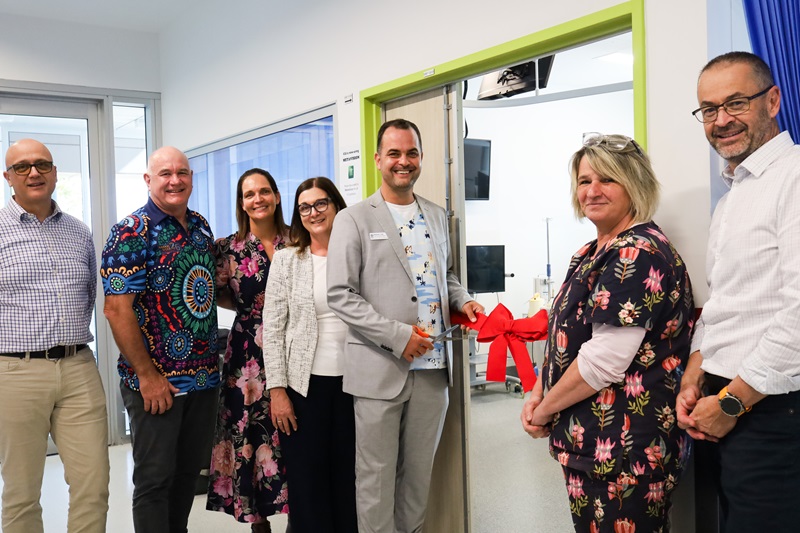
Critically unwell children will have faster access to specialist care while remaining closer to home with a new Paediatric Telehealth Intensive Care Service at Mackay Base Hospital.
The new service gives local clinicians immediate access to specialist paediatric intensive care advice while ill children remain here in Mackay, helping avoid unnecessary transfers to tertiary hospitals.
Mackay Hospital and Health Service (HHS) Chief Executive Sean Birgan said the service further strengthened care for the region’s seriously ill children by connecting local clinicians directly with paediatric intensive care specialists in tertiary centres through Telehealth.
By combining local knowledge with expert paediatric intensive care input, the model supports more coordinated care and better health outcomes for children and families across the Mackay region.
“This enables timely specialist input, supports rapid clinical decision-making and, where safe and appropriate, reduces the need for children to be transferred away from local healthcare teams and their families and support networks,” he said.
“This demonstrated Mackay HHS’s commitment to providing specialist care, strengthening local services and reducing the need for families to travel away from home.”
Mackay Base Hospital Director of Intensive Care Services and James Cook University Associate Professor Dr Stephen Luke said the new Paediatric Telehealth Intensive Care Service built on the hospital’s existing expertise in caring for unwell children and enhanced the support available to local clinical teams.
“We are already very capable of managing critically unwell children through the combined expertise of our paediatric, intensive care, emergency, surgical, anaesthetic and allied health teams,” A/Prof Luke said.
“This service will now give our local clinicians immediate access to specialist paediatric intensive care advice, helping us to deliver the right care in the right place at the right time.
“The second major benefit is helping avoid unnecessary transfers to tertiary hospitals in Townsville or Brisbane, ensuring seriously unwell children only travel when it is actually clinically required.”
A/Prof Luke said keeping children closer to home could have a significant impact on recovery as well as family wellbeing.
“Often it’s not just the time spent in a paediatric intensive care unit that matters — their recovery continues after that and being closer to family and local healthcare teams can make a real difference,” he said.
“Families can stay together, maintain important support networks and avoid the emotional, financial and practical challenges that come with travelling long distances for care.”
The new service, which was launched on Friday 24 July at Mackay Base Hospital, also strengthens continuity of care by enabling children to remain under the care of their local healthcare teams while receiving timely specialist support and oversight.
The launch event was attended by Member for Mackay Nigel Dalton and Queensland Health Director General David Rosengren and Deputy Director General Corporate Services Matt Rigby. Other guests included Mackay HHS Director Child and Adolescent Health Dr Stephan Reid, Townsville Hospital and Health Service (HHS) Director Paediatric Intensive Care Unit (PICU) Dr Andrew Clift and nurse unit manager Michelle Clark, Lifeflight clinical director Ben Shepherd as well as Queensland Children’s Hospital nursing director Learning and Workforce development Jane Harnischfeger.
A/Prof Luke said the project built on strong partnerships with tertiary hospitals and continued investment in workforce capability, helping local clinicians deliver high-quality care closer to home.
The service was the result of an internal collaboration between Intensive Care Services and the Aboriginal and Torres Strait Islander Health Unit, which involved significant funding towards telehealth resources and equipment including two ceiling-mounted cameras.
In addition to improving patient access and outcomes, the service will also provide ongoing education and professional development opportunities for clinicians, helping to build confidence and capability in managing complex paediatric presentations across the region, A/Prof Luke said.