
The importance of perinatal mental health is increasingly recognised as an integral part of healthcare.
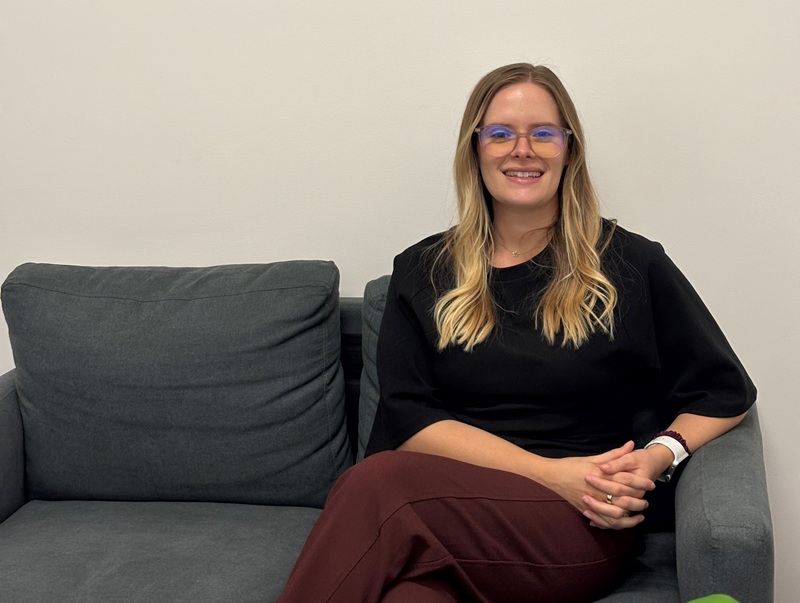
For Mackay psychologist Shevy-Jean Zerner, being part of this evolution from the historical focus on physical health to a more holistic understanding of family wellbeing is both meaningful and very rewarding.
The Mackay HHS perinatal mental health clinician supports parents and babies through the emotional and psychological challenges of the perinatal period, from pre-conception through to two years after birth.
She works across Mackay Base Hospital and Mackay Community Mental Health, conducting assessments and interventions and providing community support for families experiencing mental health concerns.
She joined Mackay HHS two and a half years ago, but it’s a role where no two days are the same.
“Some days I’m in the office working with pregnant mums, or mums and bubs on their mental health, often involving the broader family system,” she said.
“Other days, I’m out on the road offering home visits, or meeting with our lovely team to make sure our families are receiving the best care.”
Mackay-born, Shevy-Jean spent about eight years in Brisbane studying and working before returning home to be closer to family. She completed her undergraduate psychology degree and two-year master's program at the University of Queensland, gaining experience across Brisbane hospitals, community services and the drug and alcohol sector.
Time working with the Nundah perinatal team was particularly influential and really sparked her interest in the field. Her career choice was also driven by a strong desire to understand people and make a meaningful difference in their lives.
“Psychology and mental health particularly drew me in because we get to look beyond someone’s symptoms and understand what their experience means to them,” she said.
“In perinatal care, I really value being alongside families during such a significant transition and helping them feel understood, supported and confident within themselves.
“One of the greatest rewards is watching a mother, father, parent or caregiver smile, smirk or babble back to their baby, even when they think they’re not connecting or bonding and being able to reflect that moment back to them,” she said.
“There’s real significance in that.”
Working alongside infant mental health clinicians, her team supports early intervention to strengthen attachment and wellbeing from the earliest stages of a child's life.
Shevy-Jean said a common misconception was that perinatal mental health only related to postnatal depression or began once a baby arrived.
“The perinatal period starts well before a baby is born,” she said.
“We work beyond clinical diagnoses of anxiety, depression and obsessive-compulsive disorder. We also work with things like identity changes, birth trauma, grief, relationships and the expectations people carry about becoming a parent.”
Societal expectations that parenthood should be an entirely joyful experience could make it difficult for parents to acknowledge they were struggling or seek help without guilt or shame.
“It's important for people to know that you can love your baby and still find pregnancy or parenthood really hard,” Shevy-Jean said.
“Joy, grief, anxiety and love can co-exist and struggling does not mean you are failing as a parent.
“You don't need to wait until you're at breaking point to ask for support. Parents should reach out to their supports or local services, even for the simplest of questions.”
She also urged family and friends to look beyond the usual question of how someone was going.
“Please remember to ask, ‘How are you REALLY going?’” she said.
Shevy-Jean is passionate about improving access to specialist perinatal mental health care in regional communities and is looking forward to expanding opportunities for early intervention and prevention.
She hopes to continue developing her clinical expertise while contributing to service development and research that helps deliver accessible, evidence-based care to more families across the Mackay region.